
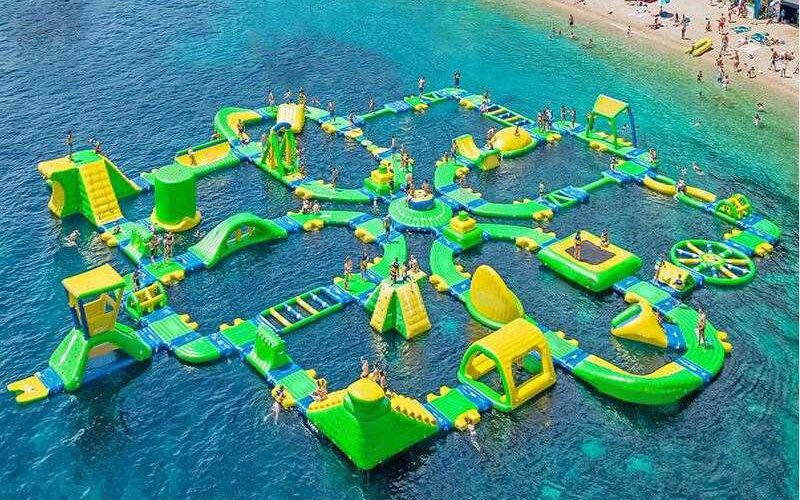
Choosing the right location is one of the most important decisions when planning a commercial inflatable water park. Among all site requirements, water depth is one of the most common questions asked by resort owners, campground operators, municipalities, and tourism businesses.
The ideal water depth depends on the type of inflatable modules you choose, the intended users, and the conditions of your installation site. A site that is too shallow may not provide sufficient clearance, while water that is unnecessarily deep can increase installation complexity and operating costs.
This guide explains how water depth affects inflatable water park installations and what you should evaluate before selecting a location.
Why Water Depth Matters
Water depth is not simply about allowing inflatables to float.
It directly affects:
- User safety
- Module selection
- Anchoring methods
- Installation costs
- Daily operation
- Long-term maintenance
Selecting an appropriate water depth helps create a safer and more enjoyable experience for visitors while simplifying installation and maintenance.
Is There a Standard Water Depth?
There is no single water depth that works for every inflatable water park.
The recommended depth varies depending on:
- The types of inflatable modules
- The height of climbing features
- Local safety regulations
- The age group of visitors
- The condition of the lake or waterfront
For this reason, every commercial project should be evaluated individually before the final layout is confirmed.
Factors That Affect Water Depth Requirements
Inflatable Module Type
Different attractions require different operating conditions.
For example:
- Floating walkways generally have different requirements than climbing towers.
- Slides often require additional water clearance near the landing area.
- Trampolines and jumping features may require greater consideration depending on their intended use.
A modular park usually combines several attraction types, so the overall design should account for the requirements of every section.
User Age Group
The target audience also influences park design.
A family-oriented park designed for younger children may require a different layout from a park intended primarily for teenagers and adults.
Understanding your customer base helps determine both the park configuration and the most appropriate installation location.
Water Level Changes
Many lakes experience seasonal changes in water level.
Before installation, consider:
- Spring water levels
- Summer operating conditions
- Seasonal rainfall
- Drought periods
- Dam-controlled water levels
A location that appears suitable during one season may become unsuitable later in the year if water levels change significantly.
Lake Bottom Conditions
Water depth is only one part of the site assessment.
The lake bottom should also be inspected for:
- Large rocks
- Tree stumps
- Sharp debris
- Thick vegetation
- Uneven surfaces
A clean and stable lake bottom helps simplify installation and improves long-term operation.
Choosing the Right Installation Area
Besides water depth, consider the overall environment.
An ideal location typically offers:
- Calm water conditions
- Convenient shoreline access
- Adequate space for visitors
- Easy emergency access
- Room for future expansion
Selecting the right location from the beginning can reduce operating challenges in the future.
Does Water Depth Affect Anchoring?
Yes.
The anchoring system should always be designed according to the site’s conditions.
Factors that influence anchoring include:
- Water depth
- Lake bottom composition
- Wave conditions
- Wind exposure
- Park size
Common commercial anchoring solutions include concrete anchors, helical screw anchors, sand anchors, and floating mooring systems.
Common Mistakes When Selecting a Site
Many first-time operators focus only on the available space.
However, successful projects also evaluate:
- Seasonal water level changes
- Bottom conditions
- Accessibility
- Future expansion
- Weather exposure
- Local operating requirements
Taking time to assess these factors before installation can help avoid costly adjustments later.
Tips Before Planning Your Water Park
Before finalizing your project, it’s helpful to:
- Survey the installation site.
- Record water depth at multiple locations.
- Check seasonal water level fluctuations.
- Identify underwater obstacles.
- Consider future park expansion.
- Review any local safety or environmental requirements.
Planning ahead usually results in a smoother installation process and lower long-term operating costs.
Frequently Asked Questions
Can I install an inflatable water park in a lake?
Yes. Lakes are one of the most common locations for commercial inflatable water parks, provided the site meets appropriate safety and installation requirements.
Does deeper water always mean a better location?
Not necessarily. The ideal depth depends on the park layout, module selection, and local conditions rather than simply choosing the deepest area available.
Can water levels change throughout the year?
Yes. Seasonal rainfall, drought, and local water management can all affect water levels, making it important to evaluate the site before installation.
Should the lake bottom be inspected?
Absolutely. Rocks, tree stumps, debris, and uneven surfaces should all be identified before installation begins.
Can an inflatable water park be installed in saltwater?
Yes. Commercial inflatable water parks can be installed in both freshwater and saltwater environments when suitable materials and anchoring systems are used.
Who should assess the installation site?
A professional site assessment is recommended before confirming the park layout. Evaluating water depth, lake conditions, anchoring requirements, and accessibility helps ensure the project is planned safely and efficiently.
Final Thoughts
Water depth is only one part of planning a successful commercial inflatable water park. Factors such as lake conditions, seasonal water level changes, anchoring requirements, accessibility, and future expansion all play an important role in creating a safe and enjoyable attraction.
By carefully evaluating your site before installation, you can reduce future maintenance challenges, improve operational efficiency, and provide a better experience for visitors.