
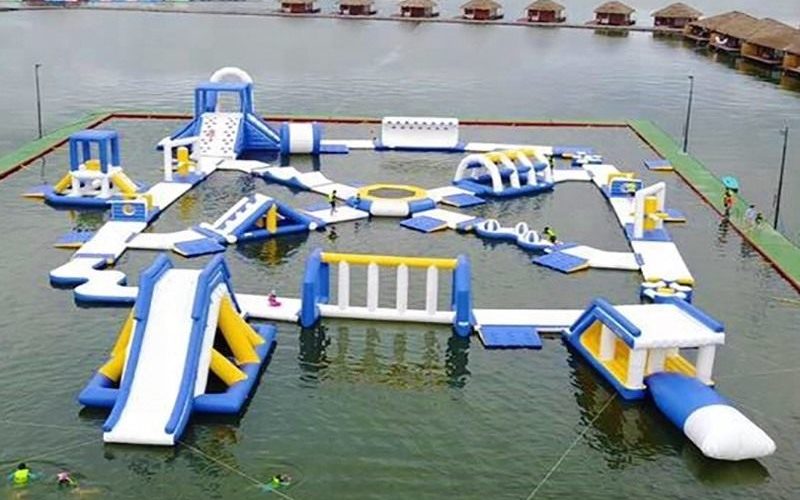
Choosing the right inflatable water park layout is one of the most important decisions you’ll make before starting your project. A well-designed layout not only creates a better visitor experience but also improves safety, operational efficiency, and long-term profitability.
Every location is different. The ideal layout depends on your available water area, target customers, budget, and future expansion plans. Instead of selecting the largest layout available, it’s better to choose one that fits your site and business goals.
This guide explains the key factors to consider when selecting the right commercial inflatable water park layout.
Why the Layout Matters
The layout determines how visitors move through the park and how efficiently the attraction operates.
A good layout should:
- Provide an enjoyable experience for all age groups
- Maintain a smooth flow of visitors
- Avoid overcrowded areas
- Make supervision easier
- Leave space for future expansion
A thoughtful design can improve customer satisfaction, increase operational efficiency, and support long-term business growth.
Choose a Layout That Matches Your Business
Different businesses have different operating goals, visitor demographics, and available space. Selecting a layout that matches your business model is often more important than simply choosing the largest configuration.
| Business Type | Recommended Layout Size | Typical Focus |
|---|---|---|
| Campgrounds | Small to Medium | Family-friendly recreation |
| Resorts | Medium to Large | Guest entertainment and leisure |
| Municipal Beaches | Medium to Large | High visitor capacity |
| Adventure Parks | Large | Challenging obstacles and active play |
| Summer Camps | Small to Medium | Children and group activities |
Choosing the right layout for your business helps maximize visitor satisfaction while making daily operations more efficient.
Consider Your Available Water Area
Before selecting any inflatable modules, carefully measure the usable water area.
Important factors include:
- Total water surface area
- Water depth
- Distance from the shoreline
- Seasonal water level fluctuations
- Local regulations
- Existing underwater obstacles
Not every part of a lake, reservoir, or waterfront is suitable for installation. Evaluating the site early helps prevent costly redesigns and installation challenges later.
Before making a final layout decision, it’s also worth conducting a simple site survey to confirm water depth, shoreline access, underwater conditions, and potential anchoring locations. Spending time on site evaluation early in the planning process can save significant time and costs during installation.
Understand Your Target Customers
Different customer groups expect different experiences.
Family-Oriented Parks
Families with young children usually prefer:
- Smaller slides
- Easy climbing features
- Wide floating walkways
- Open play areas
Comfort, safety, and accessibility are often more important than extreme challenges.
Teenagers and Adults
Older visitors generally enjoy:
- Taller climbing towers
- Larger slides
- More challenging obstacles
- Longer activity routes
These layouts encourage repeat visits and longer play sessions, making them especially popular at resorts, adventure parks, and public recreation areas.
Start with a Scalable Layout
Many successful operators do not purchase the largest park at the beginning.
Instead, they start with a medium-sized layout and expand as their business grows.
A modular design allows you to:
- Add new attractions
- Replace individual modules
- Refresh the park every season
- Increase visitor capacity gradually
This approach helps control the initial investment while providing the flexibility to expand as demand increases.
Create a Balanced Visitor Flow
A successful inflatable water park should encourage visitors to move naturally from one attraction to the next.
A balanced layout often includes:
- Entrance platform
- Climbing area
- Slides
- Balance obstacles
- Jumping features
- Resting areas
- Exit platform
Avoid placing too many high-demand attractions in one section, as this can create congestion during busy periods. A logical visitor flow also makes supervision easier and improves the overall guest experience.
Leave Space Between Attractions
Although it may be tempting to maximize the number of modules, leaving appropriate space between attractions offers several advantages.
It helps:
- Improve visitor circulation
- Reduce waiting times
- Simplify supervision
- Improve overall safety
- Make maintenance easier
A well-spaced layout often provides a better visitor experience than one that is overcrowded.
Think About Future Expansion
Many operators expand their water parks after the first successful season.
When planning your initial layout, consider:
- Available expansion space
- Additional anchoring locations
- Future visitor capacity
- Utility and maintenance access
Planning for growth from the beginning can significantly reduce future installation costs and minimize operational disruptions.
Match the Layout to Your Budget
Budget plays an important role in determining the size and complexity of your park.
Instead of focusing only on the number of modules, consider the overall project cost, including:
- Manufacturing
- Shipping
- Installation
- Anchoring
- Maintenance
- Future upgrades
A well-balanced layout often delivers better long-term value than simply purchasing the largest possible configuration.
Common Layout Mistakes
First-time buyers sometimes make decisions based only on appearance.
Some common mistakes include:
- Choosing a layout that is too large for the site
- Ignoring water depth and environmental conditions
- Overcrowding attractions
- Leaving no room for future expansion
- Selecting modules without considering visitor age groups
Careful planning can help avoid unnecessary modifications after installation while creating a better experience for visitors.
Tips for Planning Your Layout
Before confirming your design, consider the following recommendations:
- Measure the available water area accurately.
- Evaluate water depth across the site.
- Identify underwater obstacles.
- Define your target customer group.
- Allow space for future expansion.
- Consider visitor flow instead of simply adding more modules.
- Plan the anchoring system at the same time as the layout.
Every installation site is unique. Factors such as water depth, available space, shoreline access, seasonal water level changes, and local regulations should all be considered before finalizing a layout. Investing more time in planning almost always results in a safer, more efficient, and more profitable inflatable water park.
Frequently Asked Questions
How many modules should a commercial inflatable water park have?
There is no standard number. The ideal layout depends on your available space, budget, target market, and expected visitor capacity. Many operators begin with a medium-sized modular park and expand over time.
Can I add more modules later?
Yes. Most commercial inflatable water parks are modular, making it easy to add new attractions or replace existing modules as your business grows.
Should I choose the largest layout available?
Not necessarily. A layout that matches your site conditions, visitor demand, and operating budget is usually a better long-term investment than purchasing the largest possible configuration.
How much space should I leave between attractions?
The ideal spacing depends on the module types and overall layout. Sufficient space improves visitor movement, supervision, maintenance access, and overall safety.
Can the layout be customized?
Yes. Commercial inflatable water parks are commonly customized to fit the available water area, business objectives, target customers, and local operating requirements.
Does the layout affect future operating costs?
Yes. A well-planned layout can simplify maintenance, improve visitor flow, reduce congestion, and make future expansion easier, helping lower operating costs over time.
Final Thoughts
Choosing the right inflatable water park layout is about much more than selecting a collection of attractions. The best layouts are designed around the available site, visitor experience, operational efficiency, and long-term business growth.
Rather than focusing only on the number of modules, take the time to evaluate your location, target customers, budget, and long-term business goals. A well-planned layout can improve visitor satisfaction, simplify daily operations, and provide greater flexibility as your business expands.
With careful planning and a scalable design, your inflatable water park can continue to grow alongside your business while delivering a safe, enjoyable experience for visitors year after year.