
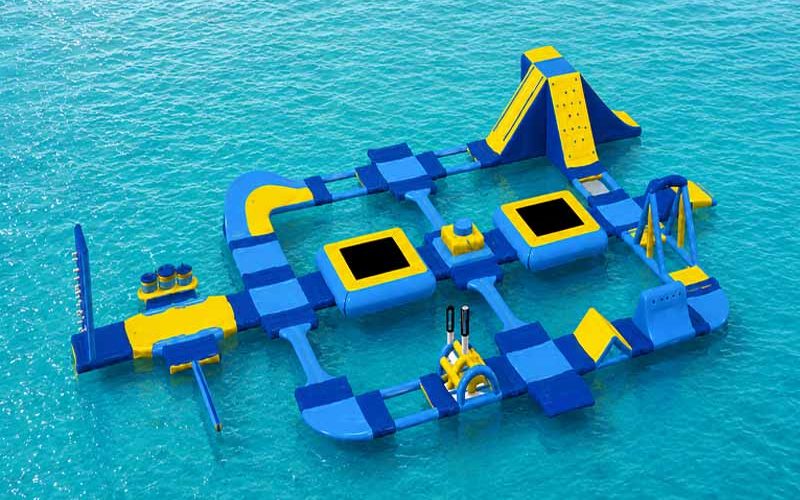
When planning a commercial inflatable water park, many operators focus first on the equipment itself. However, one of the most important decisions actually comes before choosing the attraction:
Is your available water area suitable for the project you want to build?
A campground lake, resort waterfront, and large tourism destination may all require completely different inflatable water park solutions.
The available space affects:
- The size of the attraction
- Visitor capacity
- Safety planning
- Installation requirements
- Future expansion possibilities
Choosing the right space from the beginning helps operators create a better experience for visitors while avoiding unnecessary investment.
Start With Your Available Water Area, Not the Equipment
A common mistake is selecting an inflatable water park first and then trying to fit it into an existing location.
A better approach is to evaluate the site before choosing the attraction.
Important questions include:
- How large is the available water area?
- What is the water depth?
- How many visitors are expected?
- Where will visitors enter and exit?
- Are there enough areas for supervision and operation?
The water area determines what type of layout is realistic.
A smaller lake may be perfect for a compact attraction, while a larger waterfront location may support a complete commercial inflatable water park with multiple activity zones.
How Much Space Do Different Projects Usually Need?
There is no universal size requirement because every project has different goals.
The required space depends on:
- Number of modules
- Layout design
- Expected visitors
- Safety requirements
- Local operating conditions
However, different types of businesses usually have different space expectations.
Campground Inflatable Water Parks
Campgrounds often focus on improving the guest experience rather than creating the largest possible attraction.
A suitable campground water park usually needs to balance:
- Available lake area
- Number of guests
- Easy supervision
- Operating costs
For many campground projects, a compact or medium-sized layout can provide excellent value without requiring a very large waterfront area.
The goal is usually not maximum capacity, but creating an attractive activity that encourages longer stays and repeat visits.
Resort Inflatable Water Parks
Resorts often require a larger and more impressive attraction because the water park becomes part of the overall guest experience.
Important considerations include:
- Number of resort guests
- Peak season demand
- Available waterfront space
- Visitor flow
A well-planned resort water park should provide enough activities while maintaining comfortable movement between different areas.
Tourism Attraction Inflatable Water Parks
Large tourism projects usually require more space because they are designed for higher visitor numbers.
These locations may include:
- Multiple activity areas
- Larger obstacle layouts
- More challenging elements
- Higher visitor turnover
However, a larger attraction also requires more planning for:
- Staff management
- Maintenance
- Safety procedures
- Daily operations
The largest possible park is not always the most profitable choice. The right size depends on realistic visitor demand.
Remember That Equipment Size Is Not the Only Space Requirement
Many operators only consider the footprint of the inflatable equipment.
In reality, a successful project needs additional space around the attraction.
Important areas include:
Safety Zones
Adequate surrounding space helps support safer operation.
Operators should consider:
- Distance from other activities
- Visitor movement
- Emergency access
- Operating conditions
Entry and Exit Areas
The shoreline area plays an important role in daily operation.
A practical access area helps with:
- Visitor boarding
- Staff supervision
- Equipment management
- Customer flow
Maintenance and Storage Considerations
Operators should also think about long-term operation.
Space may be needed for:
- Cleaning
- Drying
- Temporary storage
- Maintenance activities
Planning these areas early can make daily operation much easier.
Factors That Can Change Your Space Requirements
Even two projects with similar equipment sizes may require different amounts of space.
Several factors can influence the final design.
Visitor Capacity
A higher visitor capacity usually requires:
- More activity areas
- Better visitor flow
- More surrounding space
Capacity planning and space planning should always be considered together.
For more information, see:
How Many People Can a Commercial Inflatable Water Park Accommodate?
Water Depth and Conditions
The water environment affects what can be installed.
Important considerations include:
- Water depth
- Shoreline conditions
- Water quality
- Weather exposure
- Anchor locations
The site should be evaluated before finalizing the design.
For more information, see:
How Deep Does the Water Need to Be for an Inflatable Water Park?
Future Expansion Plans
Many successful operators start with a practical initial setup and expand later.
A good site should allow potential future additions such as:
- Additional obstacles
- More slides
- New activity zones
Planning ahead can help businesses grow without replacing the entire attraction.
Why Bigger Is Not Always Better
A common assumption is that a larger inflatable water park automatically creates better business results.
However, a larger attraction also means:
- Higher investment
- More maintenance
- More staff requirements
- Greater operational complexity
If visitor demand does not match the size of the attraction, the additional investment may not provide the expected return.
The best inflatable water park is the one that matches:
- Location
- Target customers
- Operating season
- Budget
- Business goals
Common Mistakes When Planning Water Park Space
Several mistakes can affect project success.
Choosing Equipment Before Evaluating the Site
The location should guide the design, not the other way around.
Ignoring Visitor Movement
A park should provide enough space for comfortable movement, not just fit as many modules as possible.
Forgetting Future Growth
A location with no room for expansion may limit future business opportunities.
Underestimating Operational Space
Daily operation requires more than just the inflatable area.
Staff access, maintenance, and visitor management should also be considered.
Final Thoughts
The amount of space needed for a commercial inflatable water park depends on much more than the size of the equipment.
Successful projects begin with understanding:
- Available water area
- Visitor demand
- Business goals
- Safety requirements
- Future expansion plans
A well-planned location allows operators to create a safer, more enjoyable attraction while maximizing the value of their investment.
Instead of choosing the largest possible inflatable water park, businesses should choose the right-sized solution for their customers, location, and long-term plans.