
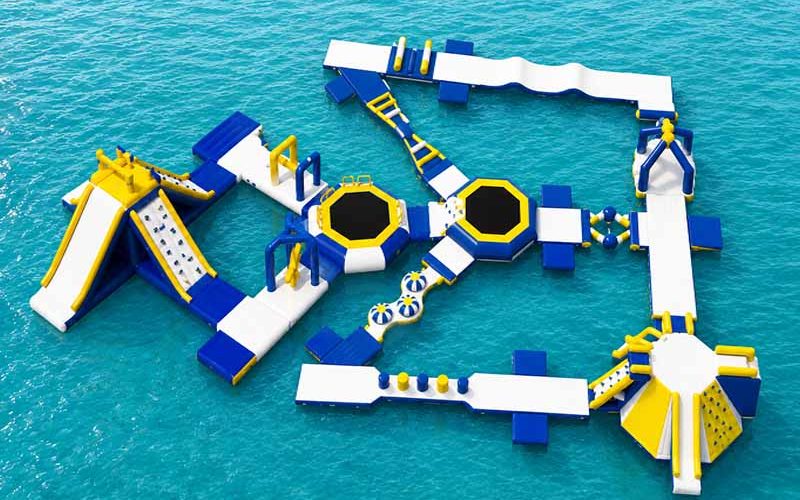
Before investing in a commercial inflatable water park, one of the first questions operators need to understand is:
How much budget should be prepared for the project?
The answer is not simply the price of the inflatable equipment.
A commercial inflatable water park is a complete business investment that may involve:
- Equipment design and manufacturing
- Layout planning
- Custom requirements
- Shipping and logistics
- Installation preparation
- Maintenance and operation costs
For campgrounds, resorts, and tourism businesses, understanding the complete investment helps operators choose a solution that matches their location, visitor demand, and long-term goals.
The lowest initial price does not always create the best value. A successful project requires a balance between equipment quality, operating costs, visitor experience, and future expansion opportunities.
What Determines the Cost of a Commercial Inflatable Water Park?
The cost of a commercial inflatable water park varies depending on many project details.
The main factors include:
- Size of the attraction
- Layout complexity
- Number of modules
- Material quality
- Customization requirements
- Shipping distance
- Installation conditions
Understanding these factors helps operators create a realistic budget before starting their project.
Park Size and Layout Design
The size of the inflatable water park is usually one of the biggest factors affecting investment.
A smaller attraction may require:
- Fewer modules
- Less production time
- Smaller installation areas
A larger commercial water park may include:
- Multiple activity zones
- More challenging obstacles
- Higher visitor capacity
- More complex connections
Larger projects require more materials and planning, which naturally increases the overall cost.
However, the largest possible park is not always the best choice. The right size should match:
- Available water area
- Target visitors
- Local demand
- Operating goals
Number and Type of Attractions
Different inflatable elements have different production requirements.
A simple layout with basic platforms may have a lower cost, while a more advanced attraction with:
- Large slides
- Climbing sections
- Balance challenges
- Obstacle elements
- Interactive features
will usually require a higher investment.
The best design is not always the one with the most modules. A well-planned layout can create a better visitor experience while maintaining efficient operation.
Material Quality and Construction Standards
Commercial inflatable water parks are designed for repeated public use, so construction quality plays an important role in long-term value.
Factors that influence cost include:
- Commercial-grade PVC materials
- Reinforced stress areas
- Connection systems
- Sewing and finishing quality
- Production inspection procedures
Choosing a lower-cost option may reduce the initial investment, but it can increase future costs if the equipment requires frequent repairs or replacement.
Custom Design Requirements
Many commercial projects require solutions based on specific locations.
Customization may include:
- Special layouts
- Different module combinations
- Branding elements
- Color adjustments
- Expansion planning
A customized design may require additional investment, but it can help operators create an attraction that better matches their customers and business model.
Typical Investment Range for Commercial Inflatable Water Parks
Because every project is different, there is no fixed price for all inflatable water parks.
However, operators can use the following ranges as a general reference:
| Project Type | Approximate Investment Range | Suitable For |
|---|---|---|
| Small Commercial Setup | Around $10,000–$30,000 | Small campgrounds, private resorts |
| Medium Commercial Water Park | Around $30,000–$80,000 | Resorts, tourism attractions |
| Large Commercial Water Park | $80,000+ | Large tourism destinations |
The final investment depends on:
- Design requirements
- Equipment size
- Materials
- Shipping location
- Customization
- Project conditions
These numbers should be considered as general guidance rather than a fixed quotation.
Other Costs Beyond the Equipment Price
Many first-time investors focus only on the equipment cost.
However, a complete project may also include:
Shipping and Logistics
International projects may involve:
- Ocean freight
- Port charges
- Local transportation
- Import procedures
Shipping costs vary depending on destination, season, and shipment size.
Site Preparation
Before installation, operators may need to prepare:
- Water access areas
- Anchor locations
- Safety zones
- Visitor entry points
Proper site planning can help avoid unexpected expenses later.
Operation and Maintenance
Long-term costs may include:
- Staff
- Cleaning
- Inspections
- Repairs
- Storage
A realistic business plan should consider both the initial investment and ongoing operation costs.
Why the Cheapest Option Is Not Always the Best Investment
When comparing suppliers, price is important, but it should not be the only factor.
Two inflatable water parks with similar appearances may differ in:
- Material quality
- Manufacturing experience
- Design capability
- Safety considerations
- After-sales support
A lower purchase price may create additional costs later if the equipment does not match the intended operating environment.
Commercial operators should evaluate the total value of the investment, not only the initial quotation.
How to Plan the Right Budget for Your Project
Before choosing an inflatable water park, operators should evaluate:
Location
Consider:
- Available water area
- Local tourism demand
- Seasonal operation period
Visitor Demand
Think about:
- Expected daily visitors
- Target customer groups
- Peak season requirements
Business Goals
Consider:
- Ticket revenue potential
- Long-term expansion plans
- Available investment budget
Working With an Experienced Project Partner
Choosing the right supplier can make the budgeting process much easier.
An experienced commercial inflatable water park partner can help operators understand:
- Which layout fits the location
- Which equipment is suitable for expected visitors
- How to balance investment and operating goals
- What factors may affect the final cost
For example, when planning projects for different markets, 365Inflatable Canada focuses on helping operators evaluate suitable designs based on available space, visitor expectations, and practical operating requirements.
The goal is not simply to provide equipment, but to help operators make better project decisions before investment.
Final Thoughts
So, how much does a commercial inflatable water park cost?
The answer depends on:
- Attraction size
- Layout design
- Material quality
- Custom requirements
- Shipping and project conditions
A successful investment is not necessarily the cheapest option or the largest attraction.
The best solution is one that matches the location, target customers, operating plan, and long-term business goals.
With proper planning and the right project approach, a commercial inflatable water park can become a valuable attraction that supports long-term business growth.